
Kyutai TTS
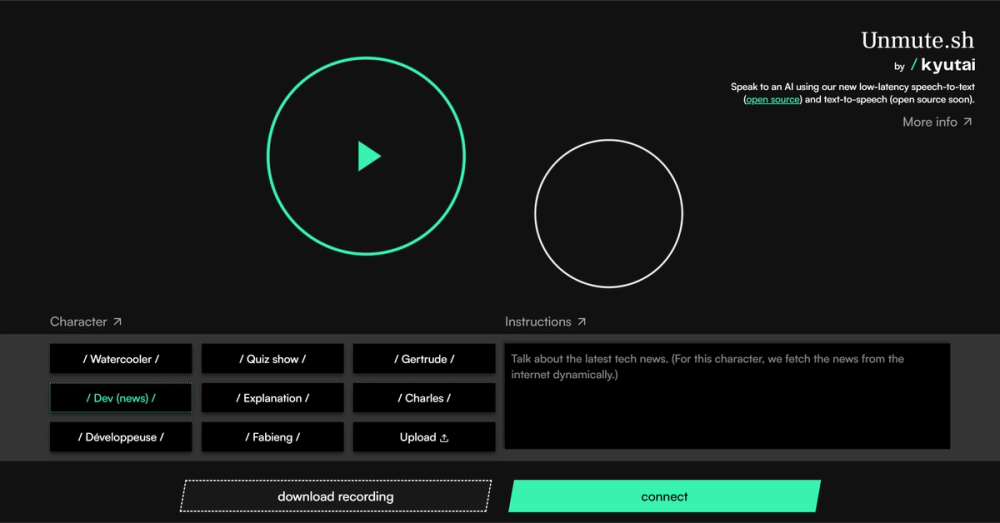
Kyutai TTS isn’t just another robotic voice generator; it is the first "audio-native" AI that speaks faster than you can blink, and it is completely free to use without an account. Unlike the expensive subscriptions from big tech, this French non-profit lab has released a tool that feels startlingly human—breaths, pauses, and all—right in your browser.
🎨 What It Actually Does
-
Real-Time Streaming: It starts speaking 220 milliseconds after it sees text—often before the sentence is even finished generating.
- The Benefit: No awkward "loading" silence. It feels like a real phone call, not a turn-based video game.
-
Audio-Native Intelligence: It doesn't just read text; it understands the sound of speech, including emotion and tone.
- The Benefit: The voice sounds grounded and present, capable of laughing, sighing, or sounding urgent, rather than just reading a script flatly.
-
Interruptibility: Because it processes audio in streams, it can handle interruptions gracefully (in the "Unmute" demo mode).
- The Benefit: You can cut it off mid-sentence to correct it or change the topic, just like you would with a human friend.
The Real Cost (Free vs. Paid)
Kyutai operates as a non-profit open-science lab. The catch? You can’t easily clone any voice you want on the web demo (to prevent deepfakes), and the server queue might slow down during viral spikes.
| Plan | Cost | Key Limits/Perks |
|---|---|---|
| Kyutai (Web Demo) | $0 | Unlimited usage (fair use), no sign-up required, standard voice library only. |
| Kyutai (Local Code) | $0 | Run it on your own hardware (requires GPU). Totally uncensored and unlimited. |
| Competitors | $5-$20/mo | usually capped at ~30-100 mins of audio per month. |
How It Stacks Up
While Kyutai wins on price and speed, the paid giants still hold the crown for polish and ease of cloning.
-
ElevenLabs (Flash v2.5):
- The Difference: ElevenLabs is still the "HD" standard. Its voices are slightly richer and smoother.
- The Cost: You pay dearly for it. A $22/month subscription gets you only ~2 hours of audio. Kyutai is free.
-
OpenAI (Advanced Voice):
- The Difference: OpenAI’s voice is locked inside ChatGPT. You can't easily export the audio for a video or project.
- The Utility: Kyutai is open. You can grab the code, build an app, or just record the system audio from the web demo without jumping through hoops.
-
Cartesia Sonic:
- The Difference: Cartesia is the only other tool that matches Kyutai's speed (latency), but it’s an enterprise-focused API.
- The Accessibility: Kyutai is for everyone; Cartesia is for developers building apps.
The Verdict
We have spent the last three years watching AI voice tools get better, but also more expensive and closed-off. Kyutai TTS is a reminder of why the open web matters. It isn't trying to sell you a subscription; it's trying to solve the problem of human-computer interaction.
By giving away a model that is fast enough to feel alive, Kyutai suggests a future where our devices don't just "read" to us—they converse with us. It shifts the power from a rented service to a owned utility. This is the moment "talking to your computer" stops feeling like a command line and starts feeling like a conversation.