Newsletter
Join the Community
Subscribe to our newsletter for the latest news and updates

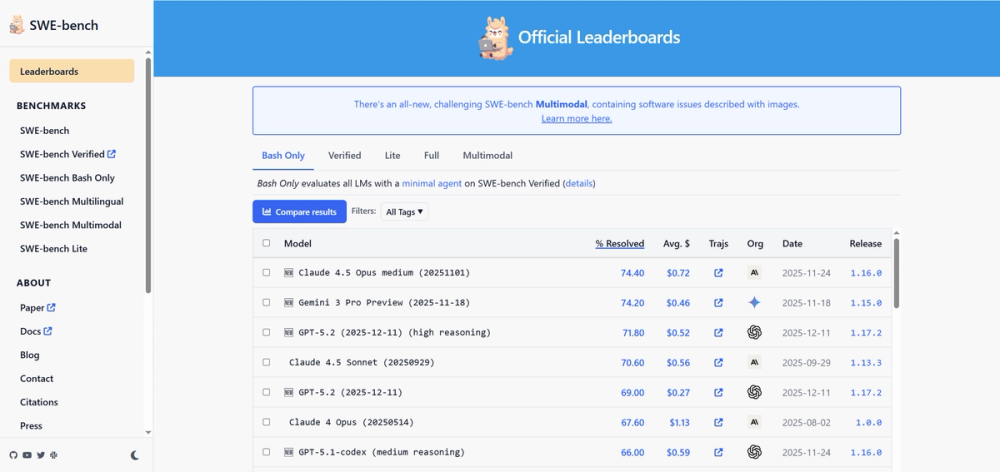
Benchmark AI coding models against real GitHub issues for free with the open-source standard SWEBench. Access the live leaderboard to compare top models like GPT-5.2 before paying for tools. Using 500 verified Python test cases, this framework acts as a "Consumer Reports" for engineering reliability, filtering out models that fail at complex logic.

I Love Free - The best free AI tools directory
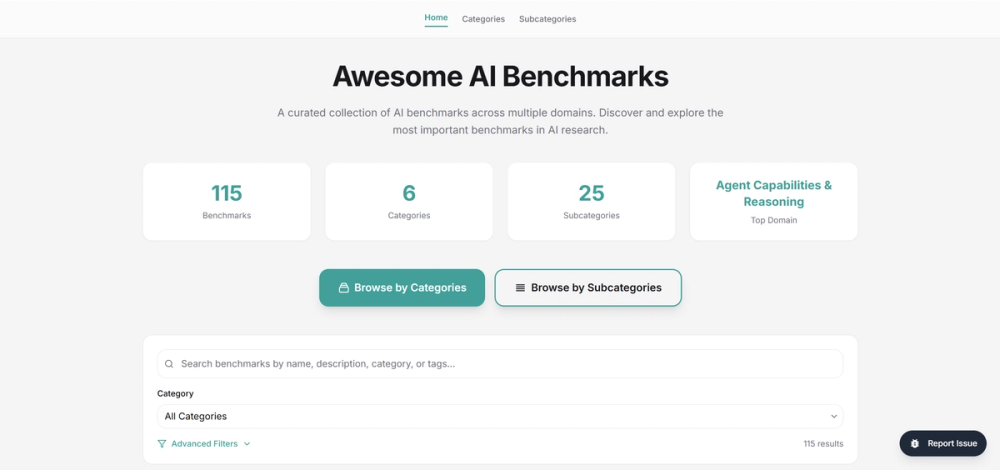
Audit AI model performance against 115+ technical exams for free with AIBenchmarks. Compare real metrics across categories like "Agent Capabilities" without creating an account or paying subscription fees. This curated hub organizes raw data into a navigable map for engineers, offering instant access to source code and validity checks superior to vague marketing charts.
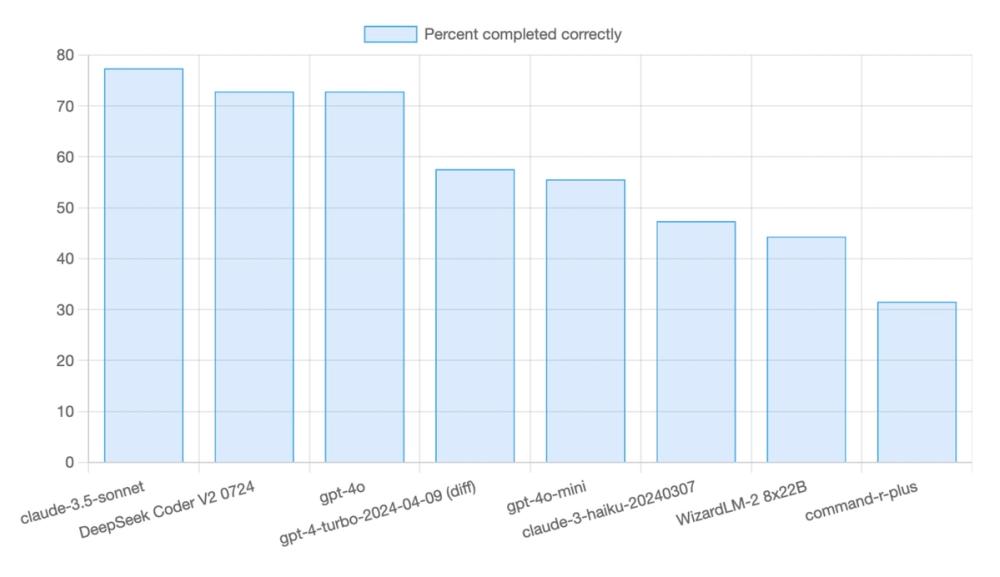
Benchmark top coding models and edit local files for free with Aider. This open-source CLI eliminates $20/month subscription fees by using a "Bring Your Own Key" model, costing just $5–$20/mo for heavy API usage. Ideal for developers requiring granular control, it validates "diff" accuracy across 225 rigorous exercises to prevent code breakage during automated refactoring.
You’ve probably seen a dozen AI coding assistants launch this year, each claiming to be the "fastest" or "smartest" engineer in a box. SWEBench isn't another one of those bots—it is the brutal exam they all have to pass.
Think of it as the Consumer Reports for AI programmers. Instead of trusting marketing hype, you check the SWEBench leaderboard to see which AI can actually fix real-world bugs without burning down your codebase. The best part? The data is 100% free to access, saving you from subscribing to a "pro" coding tool that can’t actually code.
SWEBench (Software Engineering Benchmark) takes a different approach to testing AI. Instead of giving bots simple "LeetCode" puzzles (like "reverse this list"), it throws them into the deep end of real GitHub repositories.
Real-World "Scrapes": It pulls actual bugs and issues from popular open-source Python projects (like Django or scikit-learn).
The "Verified" Standard: It uses a curated list of 500 hand-verified issues (SWE-bench Verified).
Agentic Evaluation: It allows the AI to run commands, create files, and test its own code before submitting.
Here is the trick: SWEBench is an open-source standard, not a SaaS product. You don't pay a subscription to use it, but using its data saves you money. If you are a developer wanting to run the benchmark yourself on a new model, you pay for the API tokens (computing power).
| Plan | Cost | Key Limits/Perks |
|---|---|---|
| Viewer | $0 | Full access to the Live Leaderboard. See exact pass rates for GPT-5.2, Claude Opus 4.5, and Gemini 3. |
| Runner | ~$0.50 - $2.00 | The estimated API cost per issue to test a model like GPT-5 or Claude 4.5 yourself. |
The Catch: There is no "catch" for the average user viewing the data. For developers running the test, the catch is compute time. A full run on the "Verified" set (500 issues) can cost $250–$1,000 in API credits depending on the model you are testing.
Most benchmarks are easy to game. SWEBench remains the "gold standard" because it is incredibly hard.
We are done with the era of blindly trusting AI demos. In late 2025, if a coding tool doesn't boast its SWEBench Verified score, you should be suspicious.
This benchmark has forced companies like OpenAI, Anthropic, and Google to stop optimizing for chatty conversation and start optimizing for results. It’s not a tool you install, but it’s the most important bookmark in your browser. Before you spend $30/month on the next "AI Engineer," check the leaderboard. If it can't survive SWEBench, it doesn't deserve your credit card.